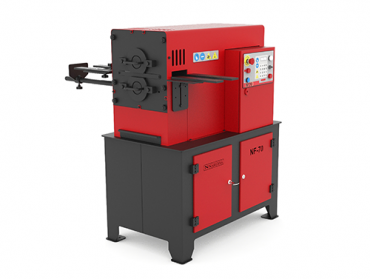
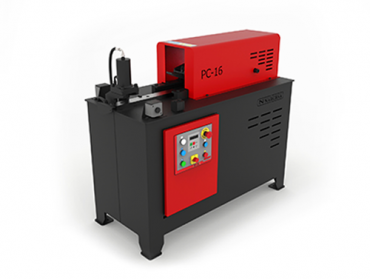
The PC16 and NF70 hot forging machines shape, flatten, roll, and form the tips of ornamental bars. They can create all types of tips—flat, pyramidal, striated, smooth, or rolled—making them ideal for blacksmiths, artistic metalworkers, locksmiths, and workshops producing series parts.
1. Production of Decorative and Functional Tips
- Spear tips for fences, gates, and railings (smooth, striated, or pyramidal)
- Fish-tail tips on flat bars for ornamental details
- Central rosette-style tips on square bars
- Flat or angled ends for structural assembly
2. Ornamental Forged Pieces
- Decorative finishes for metal furniture (headboards, benches, tables)
- Bars with central markings (trilobular or curved)
- Components for forged stairs and handrails
- Metal appliques for enclosures and architectural structures
3. Manufacturing Tools and Functional Parts
- Axe heads forged with special rollers
- Tips for all types of chisels
- Parts with reduction or expansion for mechanical fitting
- Custom technical components for machinery
4. Use with Interchangeable Rollers and Custom Molds
- Interchangeable rollers: flat, striated, pyramidal, fishtail
- Special rollers for axes, shafts, striated bars, etc.
- Possibility of creating custom molds for exclusive designs
5. Series Production and Professional Use
- Ideal for producing thousands of identical pieces per day with high precision
- Easy operation: any operator can use it without prior training
- Commonly used in blacksmithing, metal carpentry, gates, and forged furniture production
- Perfect for companies manufacturing decorative or functional components repetitively
Hot forging
The metal is heated until red-hot (approximately 850 °C to 1,200 °C, depending on the steel type) and then deformed by impact or pressure.
Advantages:
- Easier to deform hard metals
- Allows creation of more complex shapes
- Requires less mechanical force
- Ideal for producing large pieces or highly detailed ornamental items
Disadvantages:
- Higher energy consumption (for heating)
- Requires specialized furnaces or forges
- Can generate oxides or scale on the metal surface
Examples of Use:
- Manufacturing knives, swords, axes
- Creating spear tips, spirals, and forged flowers
What Types of Artistic Pieces Can Be Made?
Forging machines allow the creation and reproduction of metal pieces with high aesthetic value, suitable for both new projects and heritage restoration. They are used in artistic blacksmithing, architecture, furniture, decoration, and sculpture.
Types of Pieces That Can Be Produced:
1. Architectural Ornamental Elements:
- Volutes, spirals, and decorative curves
- Spear tips for fences, gates, railings, or balconies
- Rosettes, leaves, forged flowers, and central finishes
- Column caps, cresting, and pergola decorations
- Bars with reliefs or central markings (trilobular or textured)
2. Decorative Furniture Pieces:
- Table, bench, and shelf legs with artistic curves
- Forged iron headboards and bed backs
- Mirror or picture frames with reliefs and twists
- Metal structures for lamps, chandeliers, and lanterns
3. Metal Accessories and Custom Details:
- Hooks, hangers, and decorative appliques
- Hinges, latches, and ornamental handles
- Hand-forged nails, rivets, and bolts
- Logos, initials, crests, or personalized symbols
4. Artistic Works and Sculptures:
- Abstract, floral, or figurative sculptures
- Metal wall reliefs or decorative panels
- Thematic elements: animals, crosses, swords, symbolic keys
- Sculptural compositions for parks, gardens, or interiors
5. Restoration of Antique Pieces:
- Reproduction of historical hardware: hinges, handles, latches
- Reconstruction of damaged tips and decorations on fences or balconies
- Replication of volutes, flowers, or original headboards
- Forging of missing or deformed elements maintaining historical fidelity
- Application in churches, palaces, antique gates, and period furniture
Are They Suitable for Decorative Blacksmithing or Only Industrial Use?
The forging machines are fully suitable for both decorative blacksmithing and industrial use. Their versatility allows metals to be worked into artistic, technical, or mechanical pieces in a single operation, optimizing time, effort, and material consumption.
Main Applications:
1. Decorative and Ornamental Pieces:
- Volutes, spirals, and spear tips for fences, railings, and gates
- Rosettes, leaves, pinecone motifs, and floral finishes for metal carpentry
- Forged furniture: table legs, benches, headboards, and lamps
- Frames, appliques, and decorative hinges with artisanal value
2. Industrial and Functional Components:
- Chisels, punches, shafts, gears, and levers made by forming
- Flanges, bushings, couplings, sleeves, and bar ends for metal structures
- Assembly pieces without welding, obtained with reduction or expansion dies
- Strong mechanical joints requiring less subsequent machining
3. Forged Parts for Machinery and Automotive:
- Crankshafts, connecting rods, arms, shafts, and gear wheels forged in rough shape
- Elements requiring high mechanical strength while saving material
- Preformed parts that can later be partially machined or used directly
- Better control of metal grain, increasing durability and fatigue resistance
4. Production Efficiency and Material Savings:
- Work starts from a compact piece of material, shaped by deformation
- Reduced waste compared to subtractive machining processes
- High productivity: many pieces can be produced in seconds
- Compatible with standard or custom dies depending on technical requirements
5. Ideal Use for Mixed Workshops and Professional Production:
- Blacksmiths combining artistic projects with mechanical fabrication
- Companies performing restoration, unique pieces, or small industrial series
- Forging schools, professional training centers, and mechanical institutes
- Use combined with CNC machining, welding, or assembly
What Materials Can the Forging Machine Work With?
Forging machines are designed to deform metals through pressure or impact. Most are optimized for ferrous materials, but many can also process non-ferrous metals, depending on the machine’s power and the type of tooling used.
Nargesa machines are especially effective with steel and iron, but they also handle aluminum, copper, and bronze with appropriate settings.
Materials and Specific Applications:
Carbon Steel:
- Most common in professional forging
- Used for tools, knives, structural components, and mechanical parts
- Suitable for hot forging (from 850 °C) and can be later machined or hardened
Mild Iron or Wrought Iron:
- Ideal for artistic blacksmithing, doors, fences, railings, etc.
- Easily deformed when hot, allowing high ornamental detail
- Widely used in exterior decoration for durability and classic appearance
Stainless Steel:
- Can be hot forged with powerful equipment (hydraulic presses or trip hammers)
- Requires higher temperatures (up to 1,200 °C) and wear-resistant tools
- Used in structural elements, modern furniture, hardware, and food-grade pieces
Aluminum and Light Alloys:
- Suitable for cold or hot forging with adjustable machinery and appropriate dies
- Forged at lower temperatures (approx. 450–500 °C in hot forging)
- Used for decorative parts, housings, lightweight components, and furniture
Copper and Bronze:
- Can be hot forged for decorative, artistic, or plumbing elements
- Requires care to avoid oxidation and loss of detail
- Common in restoration, bells, jewelry, or specialty finishes
What Maintenance Do Nargesa Forging Machines Require?
Nargesa forging machines are designed to operate in demanding industrial environments, with high temperatures, repetitive impacts, and intensive cycles. Therefore, Nargesa combines robust engineering with minimal, accessible, and well-guided maintenance, so any operator can take care of them without complications.
Key Maintenance Aspects:
1. Design for Extreme Environments
- Reinforced structure to withstand heat, scale, dust, and continuous workloads
- Thermally treated components protected against corrosion
- Made of high-quality steel and assembled with industrial precision
2. Minimal and Easy Maintenance
- In most cases, only periodic lubrication is needed
- Direct access to greasing and cleaning points
- Maintenance without disassembling complex parts or stopping production
3. Can Be Performed by Any Operator
- No specialized technicians or additional training required
- Clear instructions in the manuals and official videos included with each machine
- Maintenance is designed to be fast, intuitive, and autonomous
4. Direct and Free Technical Support
- Free SAT service for technical advice and maintenance
- Personalized support from factory engineers
- Direct contact via phone, email, or web form
- Assistance with diagnostics, troubleshooting, part replacement, and best practices
5. Comprehensive Resources for Users
- Detailed manuals available in print and digital formats
- Step-by-step videos for each model on the official channel and website
- Machine-specific maintenance guides with suggested schedules and visual alerts
- Daily intensive use without loss of performance
- High mechanical reliability with low maintenance costs
- Lifetime technical support included for any inquiry
Which Models Allow Automated Repetitive Processes?
Most Nargesa forging machines are designed to automate repetitive processes, allowing homogeneous series production without requiring expert operators. Through guided systems, regulated pressure, mechanical stops, or automated rollers, repeatability and consistent quality are guaranteed.
Models with Automation for Repetitive Pieces:
- NF70: Programmable automatic cycle, ideal for producing thousands of decorative or functional tips with full uniformity
- PC16: Creates spiral volutes every 10 seconds with identical results, no adjustment needed between pieces
Advantages of Automation in the Nargesa Range:
- Continuous production with minimal variation between pieces
- Saves time and effort in series manufacturing
- Reduces human errors and improves final quality
- Perfect for companies combining design and productivity
What Does the Operator Need to Do?
- In most models, the operator only needs to load and remove the piece
- Adjustments are simple, with self-regulating hydraulic or mechanical systems
- No prior forging experience required, as the machine guides the entire process
Compatible Accessories and Dies
- While all Nargesa forging machines share the goal of shaping metal through forging, each model is designed for very different processes and functions
- Accessories, rollers, and dies are not interchangeable between models
- Specifically adapted to the geometry, power, and type of motion of each machine
Do They Require Specific Training?
- Simple and accessible operation for all models
- No technical training or certification required
- Operators can learn in just a few hours by watching official explanatory videos
- Each machine comes with a clear user manual, also available on the Nargesa website
Practical and Progressive Learning:
- Most models allow precise results from the first minutes of use
- With some practice, high repeatability is achieved, even for decorative or industrial projects
- Ideal for workshops with staff rotation or fast internal training
Free Educational Material:
- All models include detailed usage and maintenance videos
- Access to tutorials, demonstrations, and manuals via the official website
- Free SAT service also provides training assistance if needed
Perfect for Workshops, Schools, and Continuous Production:
- Easy to use, ideal for vocational centers, forging schools, and new operators
- Companies can start producing from day one without additional training costs
- Machines are designed to be tools, not obstacles
Do the Machines Include Safety Systems According to European Standards?
Yes. All Nargesa forging machines are designed, manufactured, and certified according to current European industrial safety regulations. Their robust and safe construction ensures reliable operation and protects the operator, even in demanding work environments.
Certification and Approval:
- All machines are CE-marked, mandatory in the EU
- Comply with the Machinery Directive 2006/42/EC, ensuring functional safety
- Also designed to meet electromagnetic compatibility and low-voltage standards when applicable
Integrated Safety Systems:
- Emergency stops accessible at all times
- Mechanical protection devices in moving or impact areas
- Safe electrical installations with thermal protections and clear signaling
- All models come with detailed technical manuals, including safe use and maintenance instructions
Benefits of Regulatory Compliance:
- Legal and operational peace of mind: suitable for audits, inspections, or regulated environments
- Greater reliability in high-demand industrial settings
- Facilitates export and installation in public or private projects, within and outside the EU
- Protects personnel, reducing occupational risks and improving accident prevention
Commitment to Quality and Safety:
- Machines are designed to operate for years with full operational safety
- Emphasis on simplicity of use without compromising operator protection
Compliance with European legislation strengthens Nargesa’s international reputation as a reliable and responsible manufacturer