Frequently Asked Questions about NARGESA Forging Machines
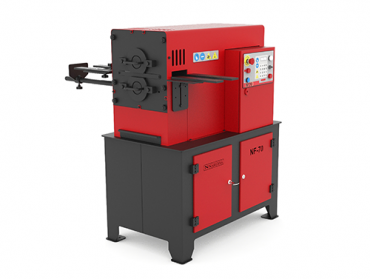
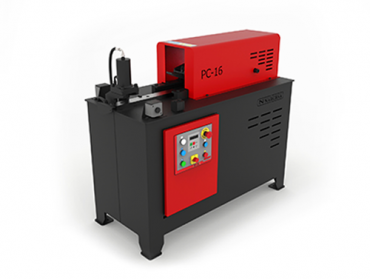
What functions do the NARGESA PC16 and NF70 forging machines perform?
The NARGESA PC16 and NF70 hot forging machines shape, flatten, roll, and form the tips of ornamental bars. They can manufacture all types of tips: flat, pyramidal, grooved, smooth, or rolled. They are ideal for blacksmiths, forgers, artistic locksmiths, and mass-production workshops.
What types of parts can be manufactured with these machines?
They can produce both decorative and functional parts, including:
- Decorative and functional tips: spear tips for grilles, gates, or fences; fishtails; central rosette-type tips; flat or angled ends.
- Ornamental parts: decorative finials for metal furniture; bars with central markings; elements for staircases and handrails; fittings for enclosures.
- Tools and functional parts: axe heads, chisel tips, parts for mechanical joints, and custom technical components.
How do interchangeable rollers and custom molds work?
NARGESA machines allow the use of interchangeable rollers and custom molds:
- Flat, grooved, pyramidal, and “fishtail” rollers.
- Special rollers for axes, shafts, and grooved bars.
- Possibility of creating custom-made molds for exclusive designs.
Can parts be manufactured in series and professionally?
Yes. These machines are ideal for mass production, capable of manufacturing thousands of identical parts per day with high precision. They are easy to operate, any operator can use them without prior training.
What is hot forging and what are its advantages and disadvantages?
Hot forging consists of heating the metal until it is red-hot (approximately 850–1,200 °C depending on the steel) and then deforming it through blows or pressure.
Advantages:
- Greater ease in deforming hard metals.
- Allows the creation of complex and detailed shapes.
- Requires less mechanical force.
- Ideal for large or decorative parts.
Disadvantages:
- Higher energy consumption.
- Requires specialized furnaces or forges.
- May generate oxides or scale on the metal surface.
What artistic applications can be carried out?
The machines allow the creation of metal parts with high aesthetic value, used in artistic blacksmithing, architecture, furniture, and restoration:
- Ornamental elements for architecture: scrolls, spirals, spear tips, rosettes, and column finials.
- Decorative parts for furniture: table and bench legs, bed headboards, mirror frames, and metal structures for lamps.
- Customized metal accessories: hooks, hinges, latches, logos, or coats of arms.
- Artworks and sculptures: wall reliefs, abstract or figurative figures, compositions for parks or interiors.
- Restoration: reproduction of historical ironwork and recovery of deteriorated elements while maintaining historical accuracy.
Are the machines suitable for decorative blacksmithing or only for industrial use?
NARGESA machines are versatile and suitable for both decorative blacksmithing and industrial production. They allow the manufacture of artistic, technical, or mechanical parts while optimizing time, effort, and material consumption.
What materials can be forged with these machines?
NARGESA machines are designed to work mainly with ferrous metals and some non-ferrous metals, depending on power and tooling:
- Carbon steel: tools, cutlery, and structural parts.
- Mild steel: artistic blacksmithing and outdoor decoration.
- Stainless steel: structural elements and modern furniture.
- Aluminum and light alloys: decorative parts and lightweight components.
- Copper and bronze: decorative elements, restoration, and plumbing.
What maintenance do NARGESA forging machines require?
Maintenance is minimal and accessible, designed so that any operator can perform it:
- Periodic lubrication and direct cleaning of lubrication points.
- No specialized technicians or disassembly of complex parts required.
- Manuals, videos, and free SAT support available for guidance and troubleshooting.
Is specific training required to operate the machines?
No. All NARGESA machines are easy to use:
- They do not require certifications or advanced technical training.
- They are quickly learned through manuals, videos, and progressive practice.
- Ideal for workshops, forging schools, and professional production from day one.
Do the machines include safety systems according to European regulations?
Yes. All machines are certified according to current European regulations (CE and Machinery Directive 2006/42/CE):
- Equipped with emergency stop buttons and mechanical protections.
- Safe electrical installations with thermal protections and clear signage.
- They guarantee safety, reliability, and legal compliance for audits or exports.