

How to Bend Square Tubing Without Wrinkles: Five Proven Methods
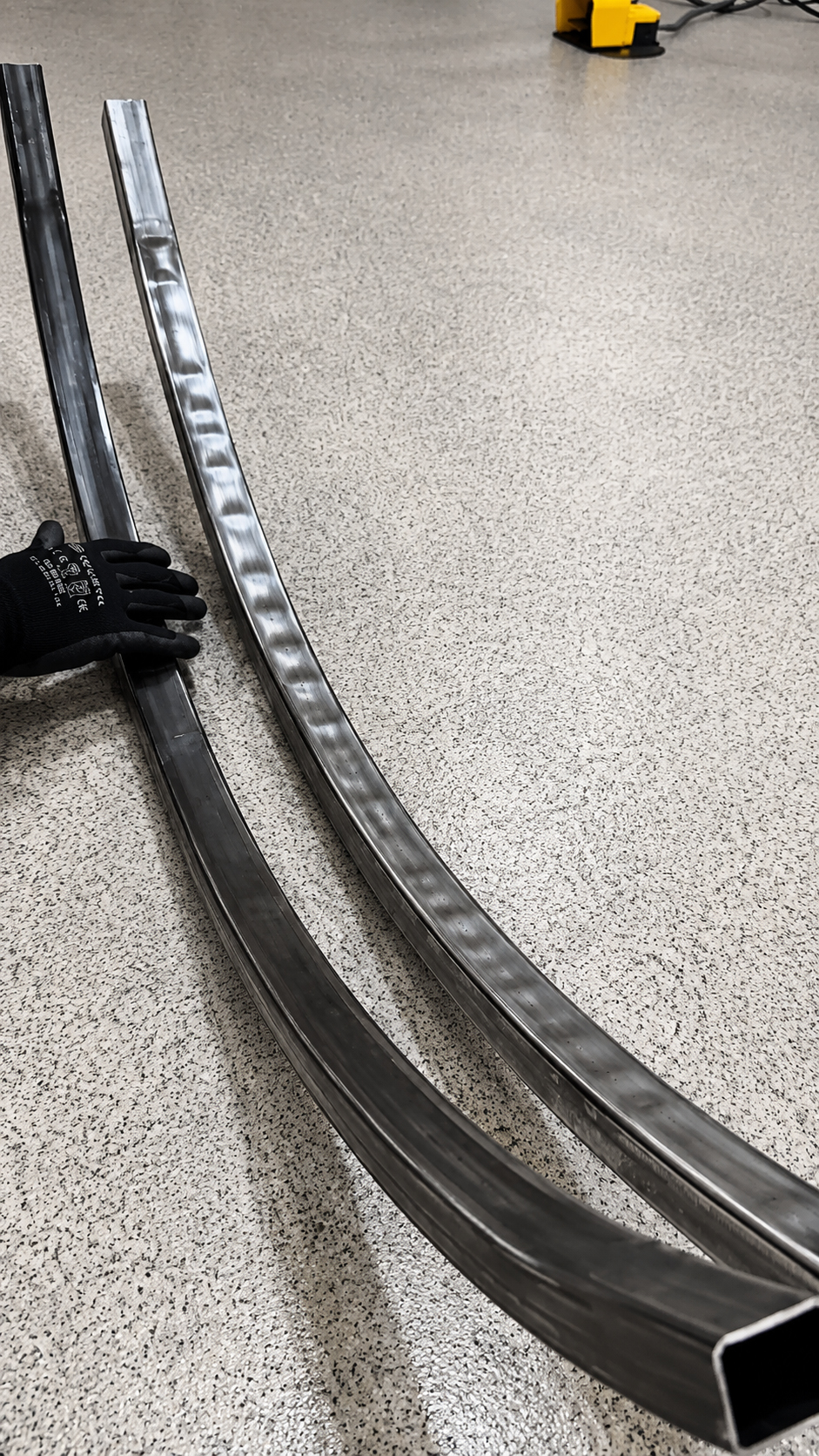
Bending thin-wall square tubing often results in wrinkles on the inside of the bend, flattening, and loss of cross-section. In this article, we compare five methods for controlling that deformation and explain which one worked best for each type of job.
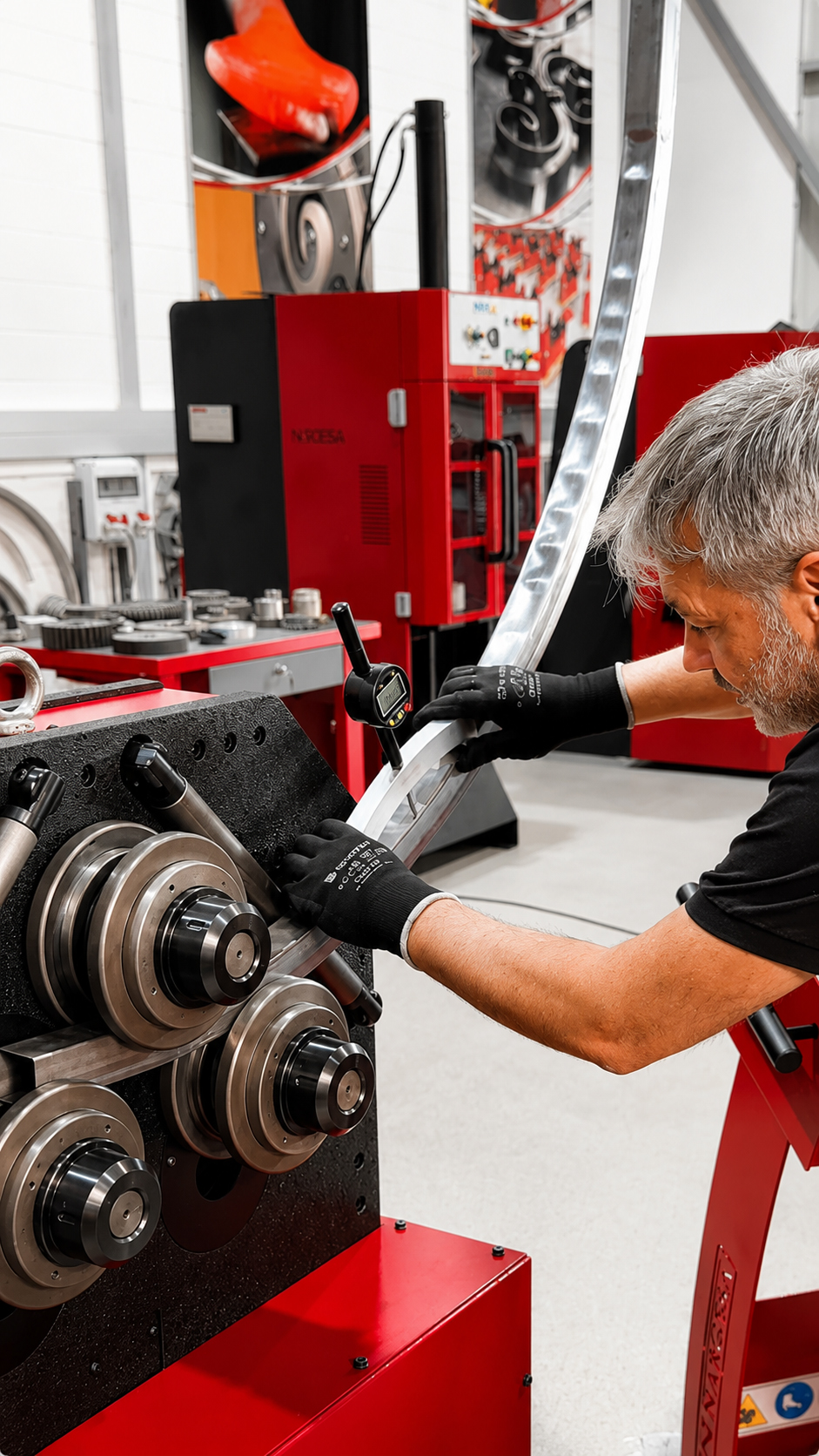
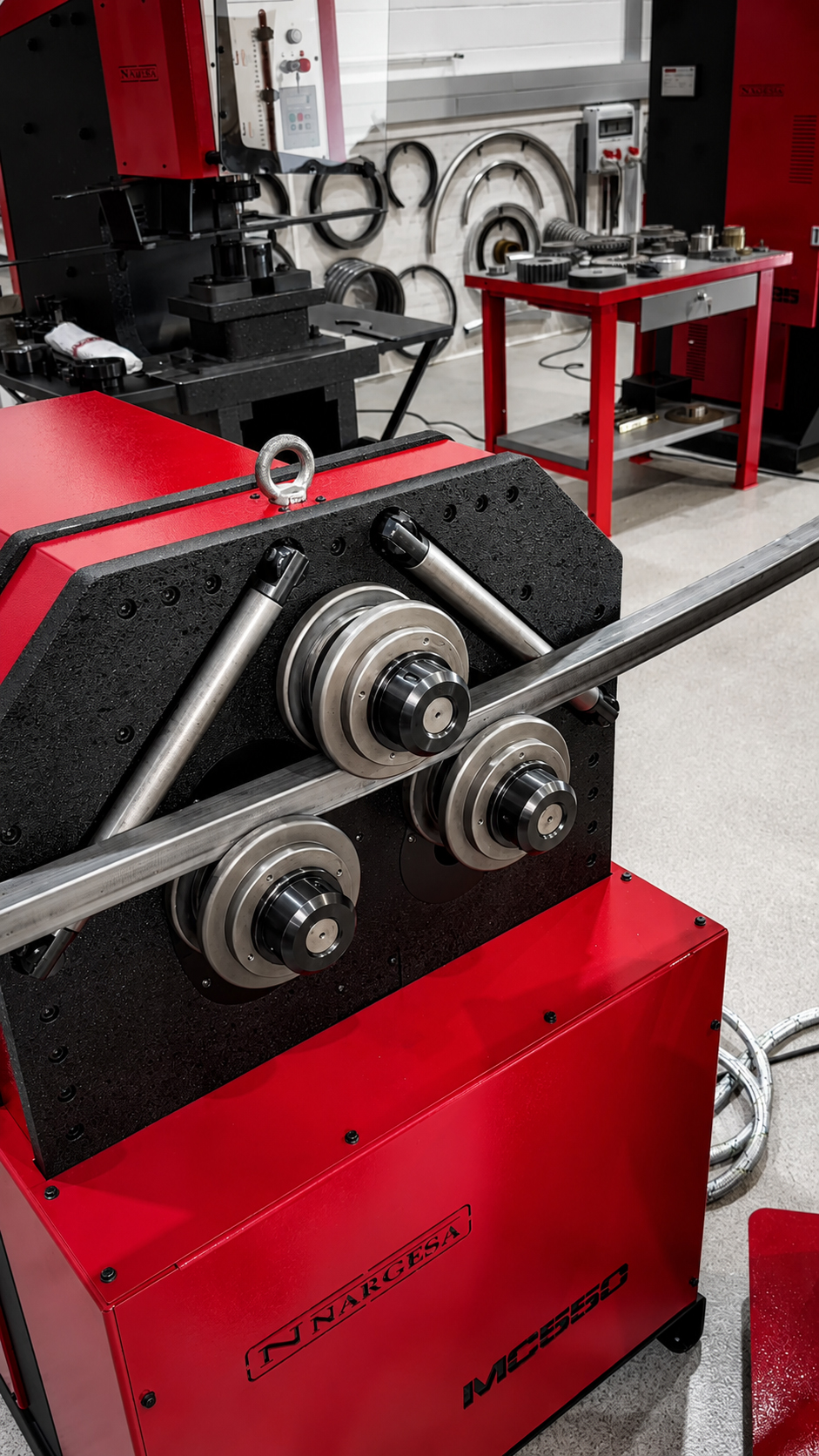
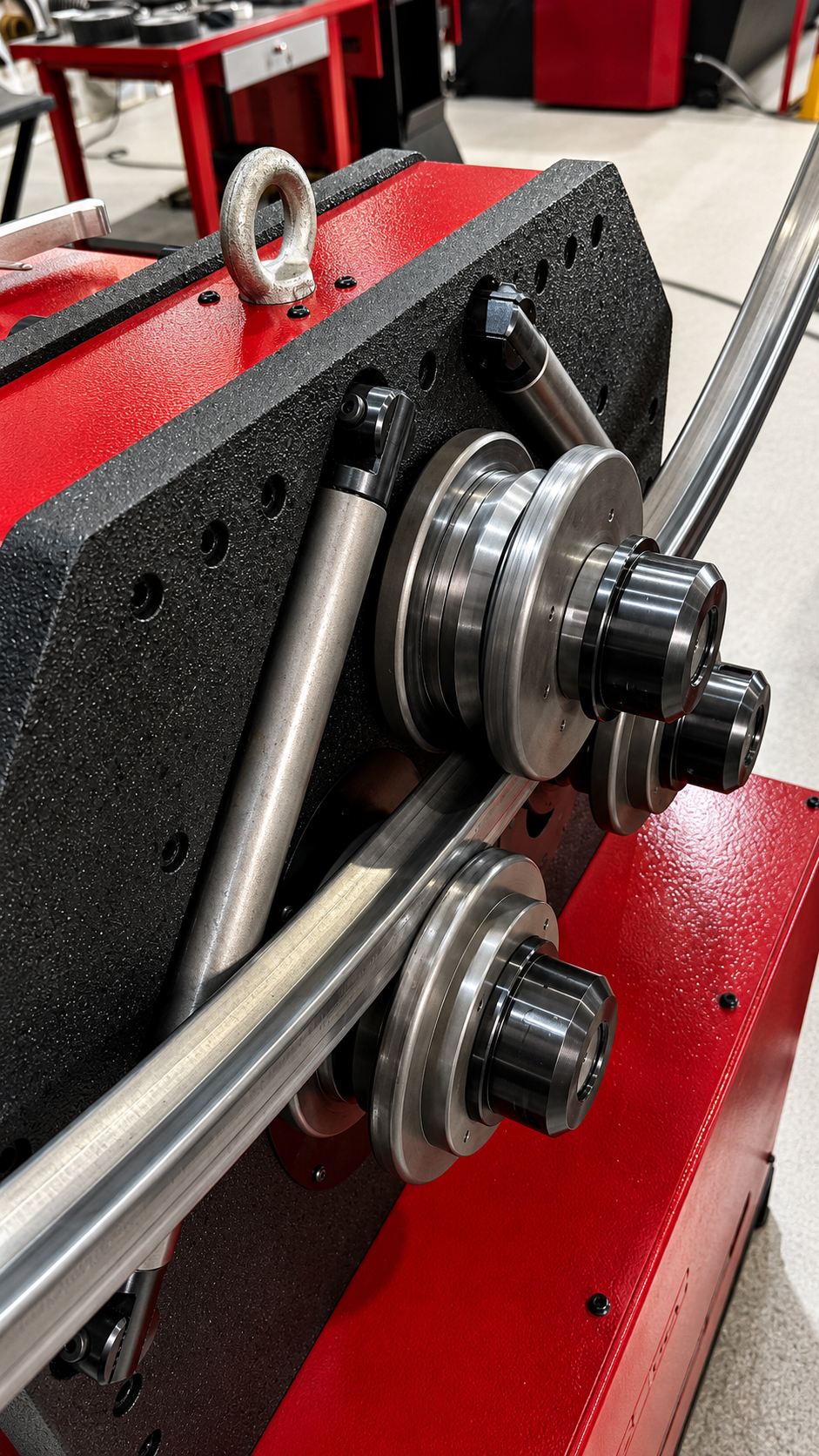
The test was carried out using 40 × 40 mm tubing with a wall thickness of approximately 1.2–1.5 mm on an MC550 section and tube bending machine. Under these conditions, rosin was the filler that best preserved the cross-section; when speed and repeatability are the priority in production, increasing the wall thickness is usually the most practical option.
Five solutions were compared:
- Using tubing with a thicker wall
- Adapting the roller geometry
- Filling the tube with fine sand
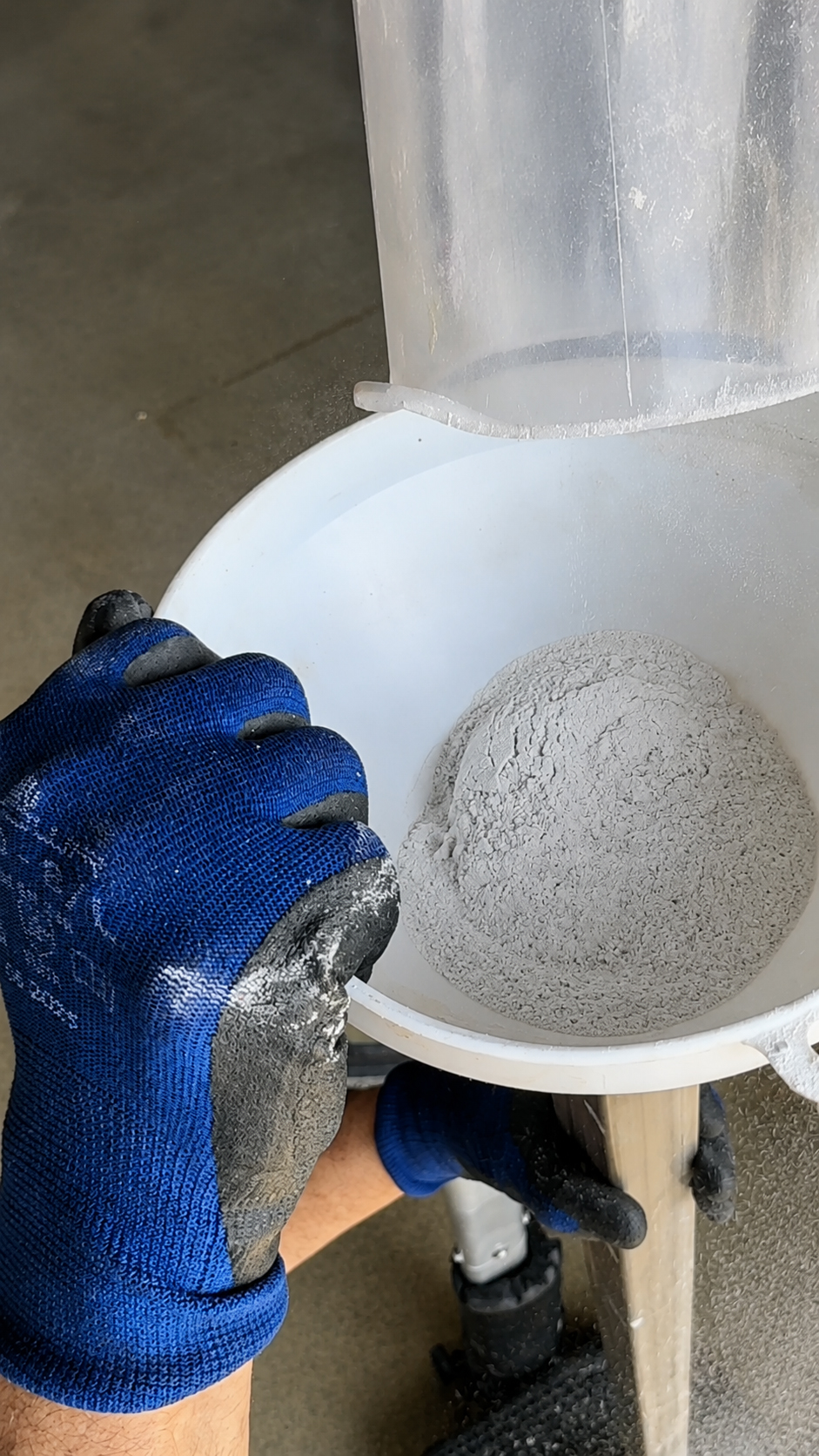
- Using marble powder
- Filling the profile with rosin
You can watch the full test on our usual video platforms or access it directly from the “Videos” section of our website. This article summarizes the results, compares the five methods tested, and explains when each option may be most suitable.
Which method produced the best result?
There is no single method for bending square tubing without wrinkles. No one solution is valid for every job. The appropriate method depends on the material, wall thickness, bending radius, required finish, preparation time, and acceptable cost.
In these tests:
- Thicker-wall tubing provided a fast and clean solution.
- The adapted roller helped control the area where deformation appeared.
- Fine sand improved the result but required more effective compaction.
- Marble powder performed slightly better than sand.
- Rosin was the method that best preserved the outside dimensions of the section.
Rosin should be regarded as the best result in this specific test, not as a universal solution for every tube, material, or bending radius.
Test data and scope
To interpret the results correctly, the conditions of the test with an MC550 section and tube bending machine must be considered:
| Tube section | |
| Approximate wall thickness | |
| Profile type | |
| Process | Three-roll cold bending |
| Machine | MC550 section and tube bending machine |
| Objective | Reduce wrinkles and cross-section loss |
| Methods compared | Wall thickness, roller, sand, marble powder, and rosin |
The results are useful for comparing these methods under specific conditions. They do not replace preliminary testing when the material, section, wall thickness, radius, or required finish changes.
Why square tubing wrinkles
During bending, the outside face of the profile is mainly subjected to tension, while the inside face is subjected to compression.
When the walls are thin, the compressed area can lose stability and form waves. This instability, also known as local buckling, is documented in studies of thin-wall tube and profile bending.
The flat faces of square and rectangular tubing are particularly sensitive. For this reason, the quality of the result does not depend solely on the power of the bending machine.
Factors that determine the result
- Wall thickness and profile dimensions
- Material and mechanical properties
- Bending radius
- Roller geometry and adjustment
- Pressure applied on each pass
- Number of passes
- Working speed
- Lateral support of the profile
- Type of internal filler
- Repeatability of the procedure
In this test, the main challenge was not the capacity of the MC550, but the loss of tube stability caused by its low wall thickness. The machine is designed to work with square, rectangular, and round tubes and profiles, among other sections.
Method 1: increase the tube wall thickness
The most direct solution was to use tubing with the same cross-section but a thicker wall.
The profile retained its geometry more effectively, developed fewer wrinkles, and did not require the filling, sealing, emptying, and cleaning operations associated with internal fillers.
Advantages
- Fast and repeatable process.
- Lower risk of wrinkles.
- Greater part rigidity.
- Suitable for production.
- Less preparation time.
Limitations
- Greater weight.
- Higher material cost.
- May be incompatible with lightweight structures.
In production, the tube price should not be the only factor considered. Preparation time must also be taken into account. Filling, sealing, bending, emptying, and cleaning a thin-wall profile can be more expensive than using a slightly thicker wall.
Method 2: adapt the roller geometry
Roller shape and adjustment directly affect control of the section. A poorly adjusted roller makes it more difficult to prevent the tube from flattening. A roller that is too wide or has excessive lateral clearance allows the tube to widen, flatten, or lose its square shape.
A roller that closely matches the profile supports its faces more effectively. The geometry of the center roller can also be modified slightly to direct a small amount of deformation toward a less visible area.
The goal is not always to eliminate every mark, but to prevent uncontrolled loss of cross-section.
When this can be a good solution
- When many identical parts are manufactured.
- When a small mark is acceptable.
- When the affected face will be hidden.
- When a repeatable process is required.
- When producing dedicated rollers is economically justified.
Method 3: fill the tube with sand
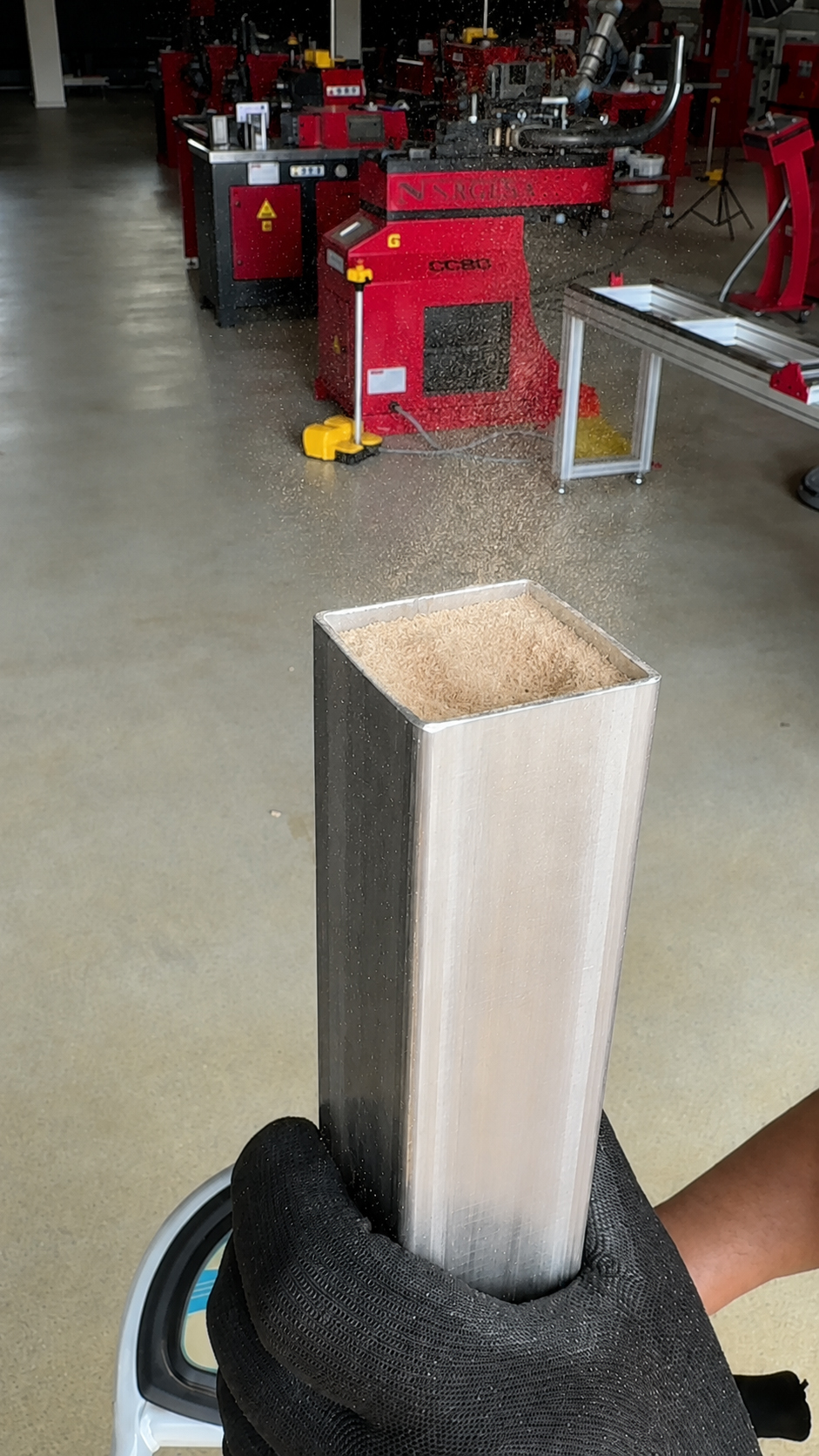
Sand acts as an internal bending filler and makes it harder for the walls to move inward. In the test, the result improved compared with the empty tube, although some wrinkles were still present. The most likely cause was insufficient compaction.
How to use sand
- Use fine sand.
- Sieve it to remove coarse particles.
- Add it gradually.
- Tap or vibrate the tube to eliminate voids.
- Continue filling until the level no longer drops.
- Seal the ends firmly.
- Apply low pressure and make several passes.
For demanding work, the end closures must prevent the filler from shifting or being expelled. The system used must suit the process and be removable safely. Filter sand or fine sand with a uniform particle size can make compaction easier. However, its source matters less than achieving a homogeneous fill without internal voids.
Dry or wet sand?
Dry sand makes it easier to fill, empty, and clean the tube afterward. However, slightly dampening it may improve compaction, help reduce the gaps between particles, and create more uniform internal support.
Before using wet sand, the subsequent operations must also be considered. Water can make emptying and internal cleaning more difficult, promote corrosion if it remains inside the tube, and generate steam if the part is heated.
Method 4: use marble powder
Marble powder has a finer particle size than sand and can fill smaller internal spaces. In this comparison, it produced a slightly cleaner result, but it did not eliminate wrinkles completely. Its effectiveness still depends on compaction, sealing of the ends, bending radius, and applied pressure.
Required precautions
Fine dust can remain suspended in the air and reach the respiratory tract. NIOSH provides specific recommendations for controlling exposure to marble dust and other particles in the workplace.
During handling, it is advisable to:
- Work with adequate ventilation.
- Avoid generating airborne dust.
- Do not clean it with compressed air.
- Use the protection specified by the risk assessment.
- Consult the product safety data sheet.
- Protect the eyes and hands when appropriate.
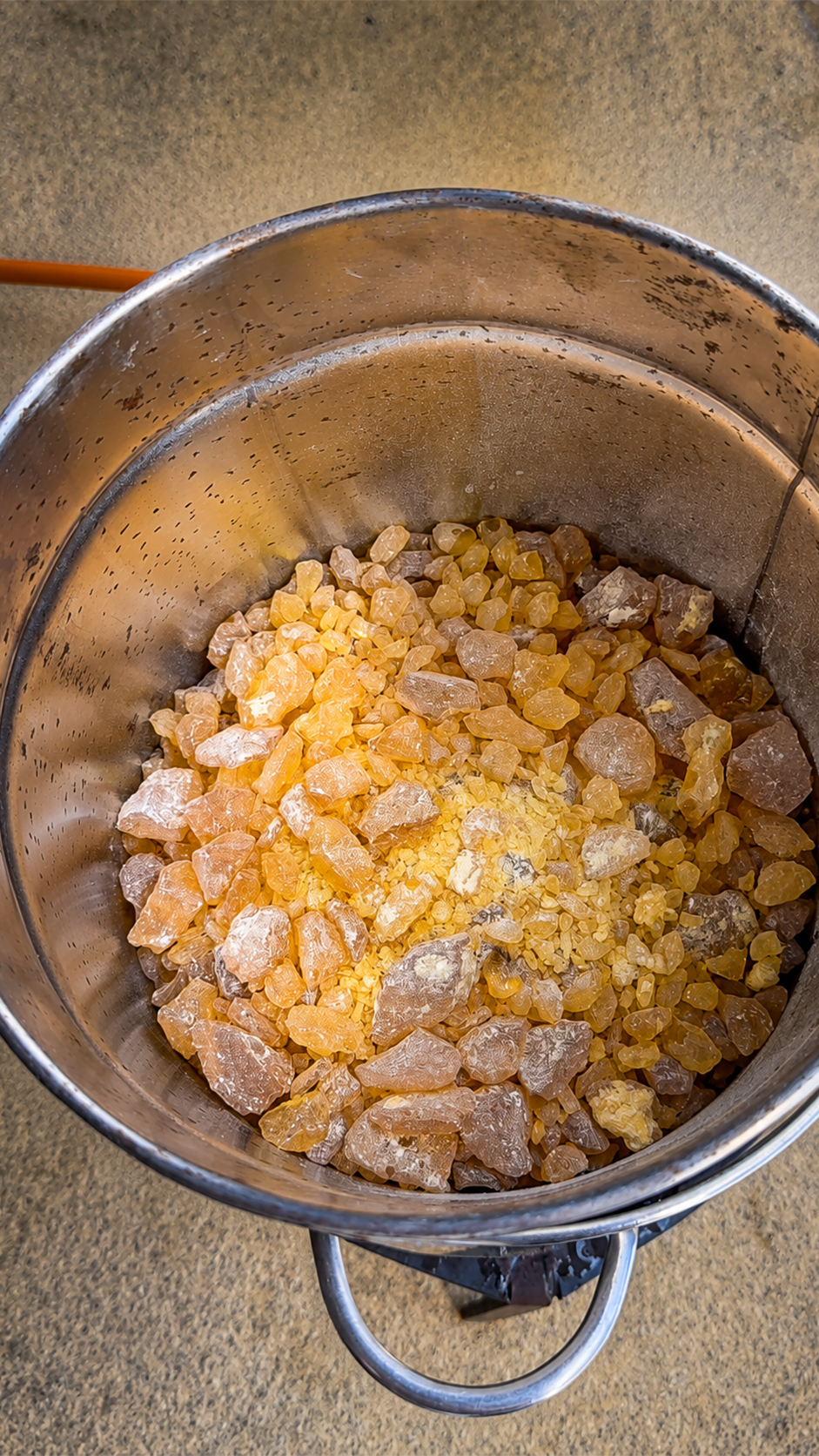
Method 5: fill the tube with rosin
Rosin was the method that produced the best result in the comparison.
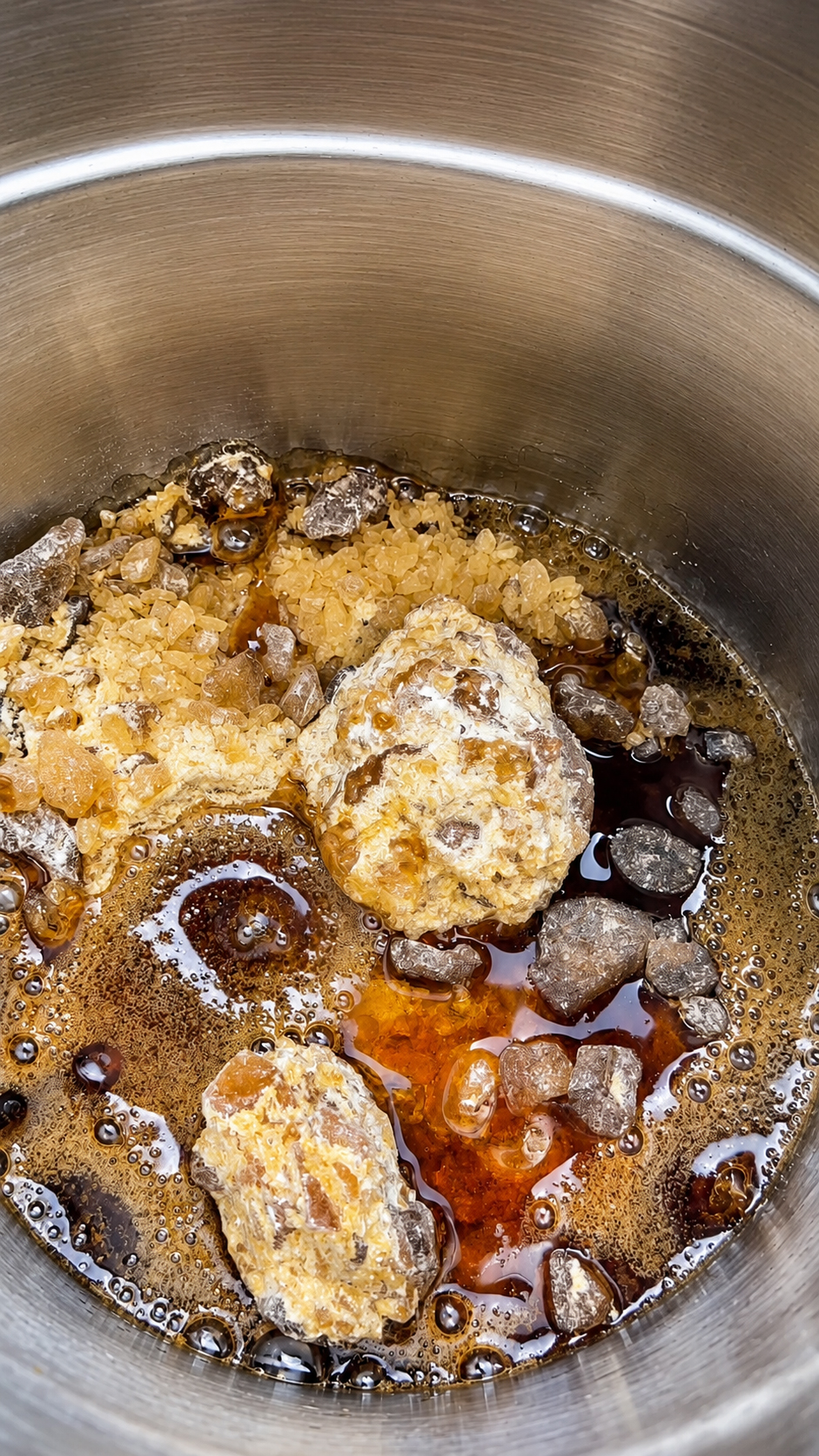
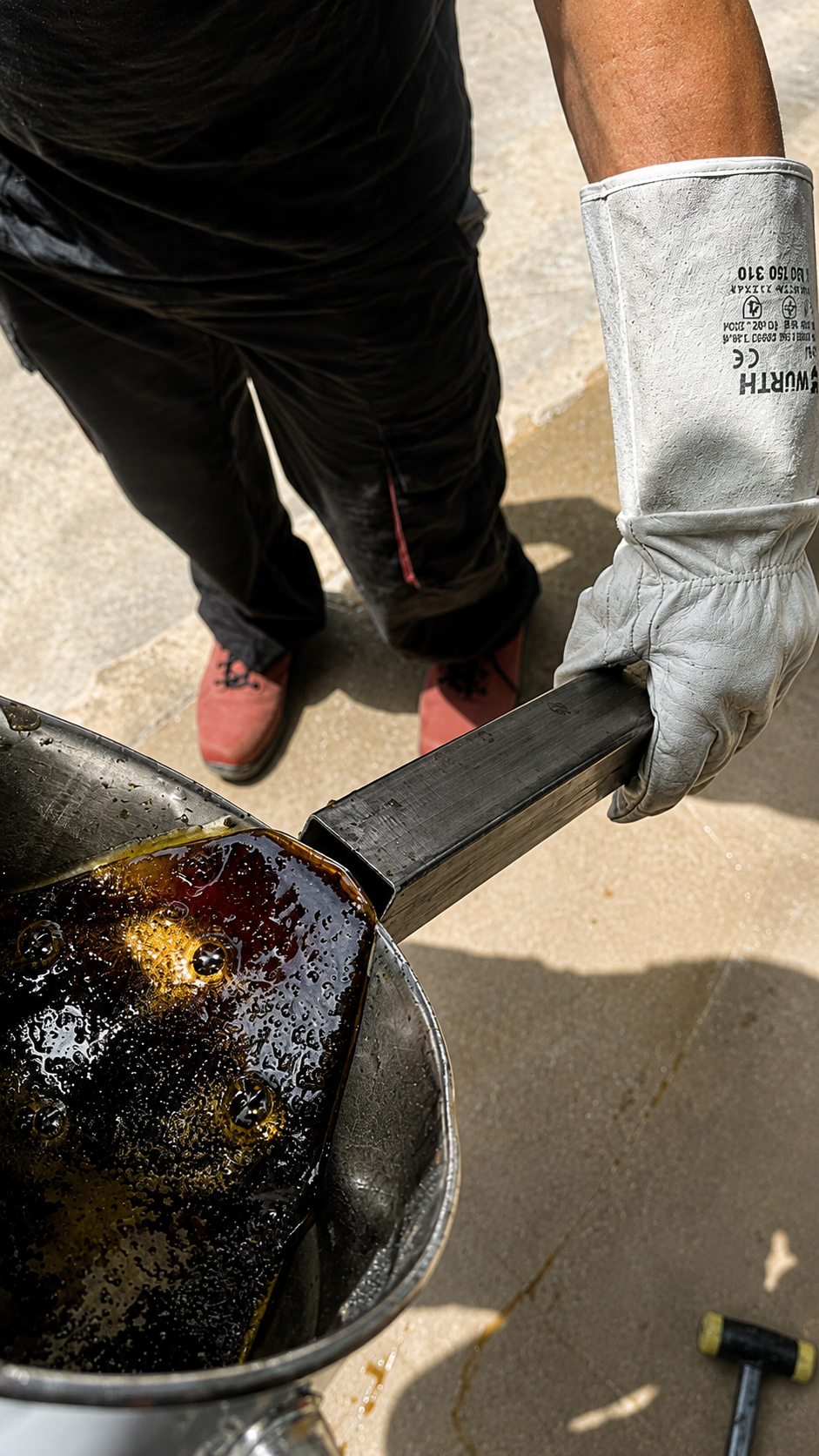
It is a pine-derived resin and must not be confused with paraffin wax. It can be heated, poured into the profile, and allowed to solidify before bending.
Once rigid, it forms continuous support that limits movement of the walls.
Result obtained
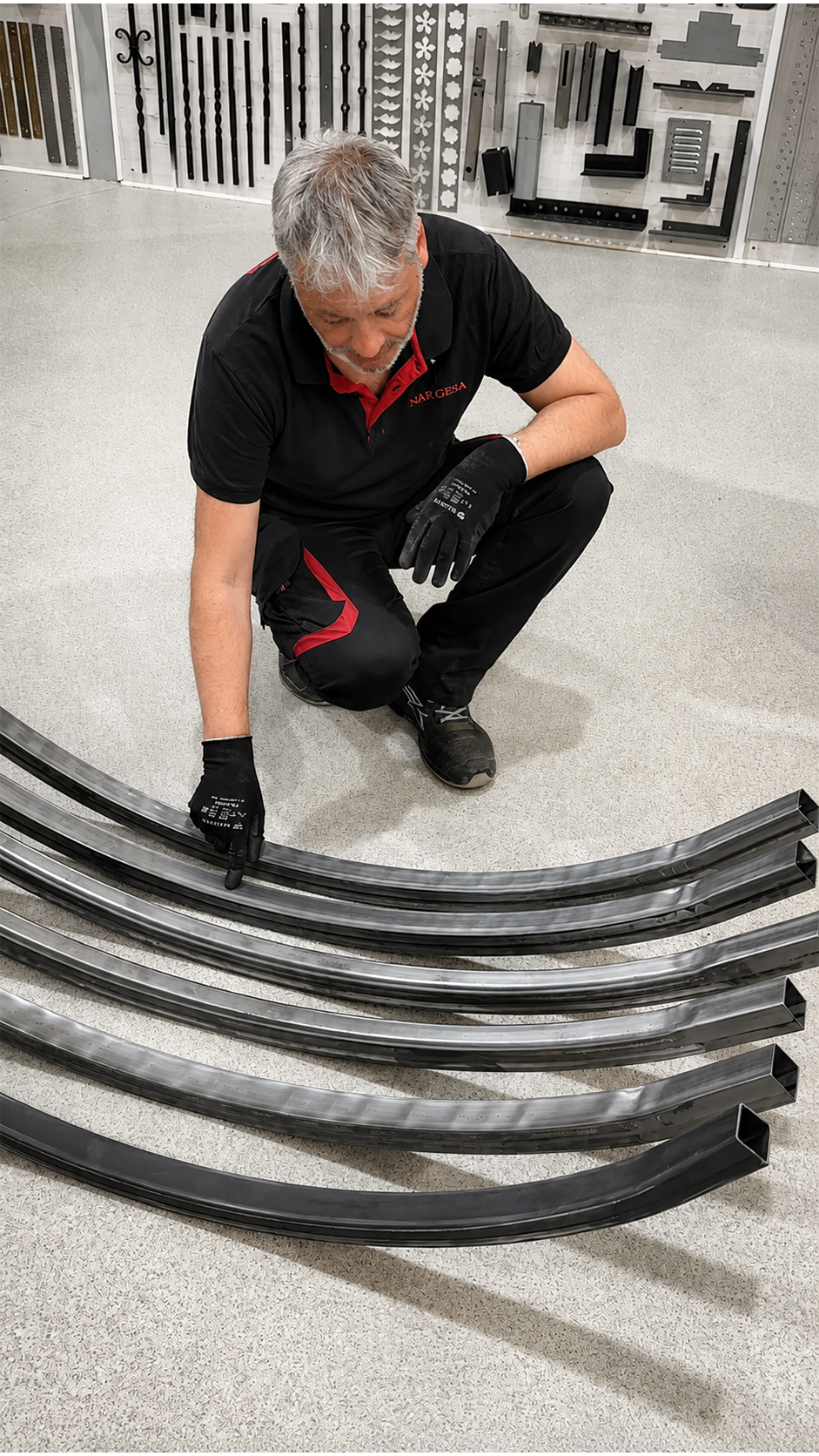
In some of the 40 mm tubes tested with other methods, the section was reduced to approximately 36–37 mm in the bent area. With rosin, it remained close to 40 mm. This figure corresponds to the measurement taken during the test and should not automatically be extrapolated to other sections or materials.
General procedure
- Consult the technical data sheet and safety data sheet for the rosin.
- Heat it in a controlled manner.
- Pour it into the tube.
- Allow it to cool and solidify.
- Bend using progressive passes.
- Reheat the tube to remove the material.
- Collect the molten rosin in a suitable container.
Safety during heating
The tube must not be heated without ventilation or kept hermetically sealed. Temperature, vapors, and the discharge of the molten material must be controlled.
The product safety data sheet must determine the specific measures required. As a preventive reference, exposure to fumes from rosin-based fluxes is recognized as an occupational respiratory hazard, so inhalation and heating without effective extraction must be avoided.
Although some residue may remain adhered to the inside, rosin does not replace galvanizing, paint, primer, or an internal treatment designed to protect steel.
Its sole function in this test was to act as a temporary technical filler.
Comparison of the five methods
| Test result | Main advantage | Main limitation | When to use it | |
| Thicker wall | Very good | Fast and repeatable | More weight and material | Production and structures |
| Adapted roller | Acceptable | Controls deformation | May leave a mark | Runs of identical parts |
| Fine sand | Good, with room for improvement | Inexpensive and accessible | Requires thorough compaction | General work |
| Marble powder | Better than sand | More uniform filling | Fine dust and cleaning | Delicate profiles |
| Rosin | Excellent in this test | Best preservation of the section | Slower process |
Special parts and demanding finishes |
Mistakes to avoid when bending square tubing
Applying too much pressure in a single pass
Forcing the final radius immediately increases the risk of wrinkles and flattening. It is preferable to make several passes and observe how the profile changes.
Using rollers with too much clearance
Insufficient lateral support allows the faces to move and the section to lose its geometry.
Filling without compacting
Filler methods lose effectiveness when internal voids are present.
Choosing a method based only on material cost
Preparation, cleaning, roller manufacturing, and filler handling time must also be included in the calculation.
Generalizing a test result
A method that works with 40 × 40 mm tubing may behave differently when the material, wall thickness, or radius changes.
How to choose the right method
The decision can be summarized in four situations.
For fast production
Use tubing with a thicker wall, provided that the weight, cost, and design allow it.
For repetitive production runs
Consider rollers adapted to the profile. The initial investment may be recovered when many identical parts are manufactured.
For a low-cost solution
Try dry, tightly compacted sand, especially for parts that can tolerate a certain degree of deformation.
To preserve the cross-section as much as possible
Evaluate rosin for a special part, a short run, or a high-demand finish that justifies the additional time.
Conclusion
There is no single method for bending square tubing without wrinkles.
When the wall thickness can be increased, this is usually the simplest and most productive solution. When the material cannot be changed, roller adjustment, pressure, and the number of passes become decisive.
Sand and marble powder can provide internal support, but they require careful compaction. Rosin requires more preparation and specific measures during heating, although it was the method that best preserved the section in this test.
The final choice should be based on the type of part, radius, acceptable deformation, finish, preparation time, and total process cost.
If you need to bend square tubing and profiles with greater control of the cross-section, take a look at the MC550 and its tooling.
Preguntas frecuentes
What is the best filler for bending square tubing?
In this test, rosin was the filler that best preserved the section. The result may vary if the material, wall thickness, or radius changes.
Does sand completely eliminate wrinkles?
Not necessarily. It can reduce them when it is very tightly compacted, but it does not guarantee deformation-free bending on its own.
Does marble powder work better than sand?
It produced a slightly better result in this comparison. However, it also requires effective compaction and greater precautions against dust.
Is rosin the same as paraffin wax?
No. They are different materials and should not be treated as interchangeable without testing.
How is the rosin removed?
The tube is reheated in a controlled manner until the material can flow out by gravity. The safety data sheet and the supplier’s instructions must be followed.
Can rosin be reused?
Yes, provided that it is recovered clean, has not degraded, and retains its properties.
Does rosin protect the tube against corrosion?
No. It is a temporary filler and does not replace an anticorrosion system.
Is it advisable to use thicker-wall tubing?
When the design allows it, it is usually the fastest and most repeatable option. The weight, cost, and availability of the profile must be considered.
Was the MC550 the limiting factor in the test?
No. The main difficulty was controlling deformation of the thin-wall profile, not the capacity of the machine.
Is testing required before production?
Yes. Whenever the material, section, wall thickness, radius, rollers, or required finish changes, the procedure should be validated with a test part.
Leave a comment
Latest posts

How to Bend Square Tubing Without Wrinkles: Five Proven Methods

What is industrial machinery, types and what is it used for

Automated Bending with Nargesa CNC Tube Benders




Join to our Newsletter
Be part of our Nargesa Community and get all information of the branch, demo clips, campaigns in Machinery…
Customers
Our trusted